
The Complete 2026 Guide to Finding a Clothing Manufacturer in China
How Startup Brands Vet Factories, Avoid Middlemen, and Start Production from Just 100 Pieces
Finding a reliable clothing manufacturer in China is the single biggest hurdle that kills 60% of new brands before they ship their first collection. You have the designs. You have the audience. You even have pre-orders. But without the right factory partner, your brand never leaves the ground.
This is not a generic listicle. I am writing this from the production floor of my own clothing manufacturer in China — a Guangzhou facility that has survived three economic cycles, two pandemic years, and the rise of fast fashion. In 2026, the apparel manufacturing landscape has shifted. AI sourcing tools, TikTok-verified factories, and "middlemen with websites" have made vetting harder, not easier.
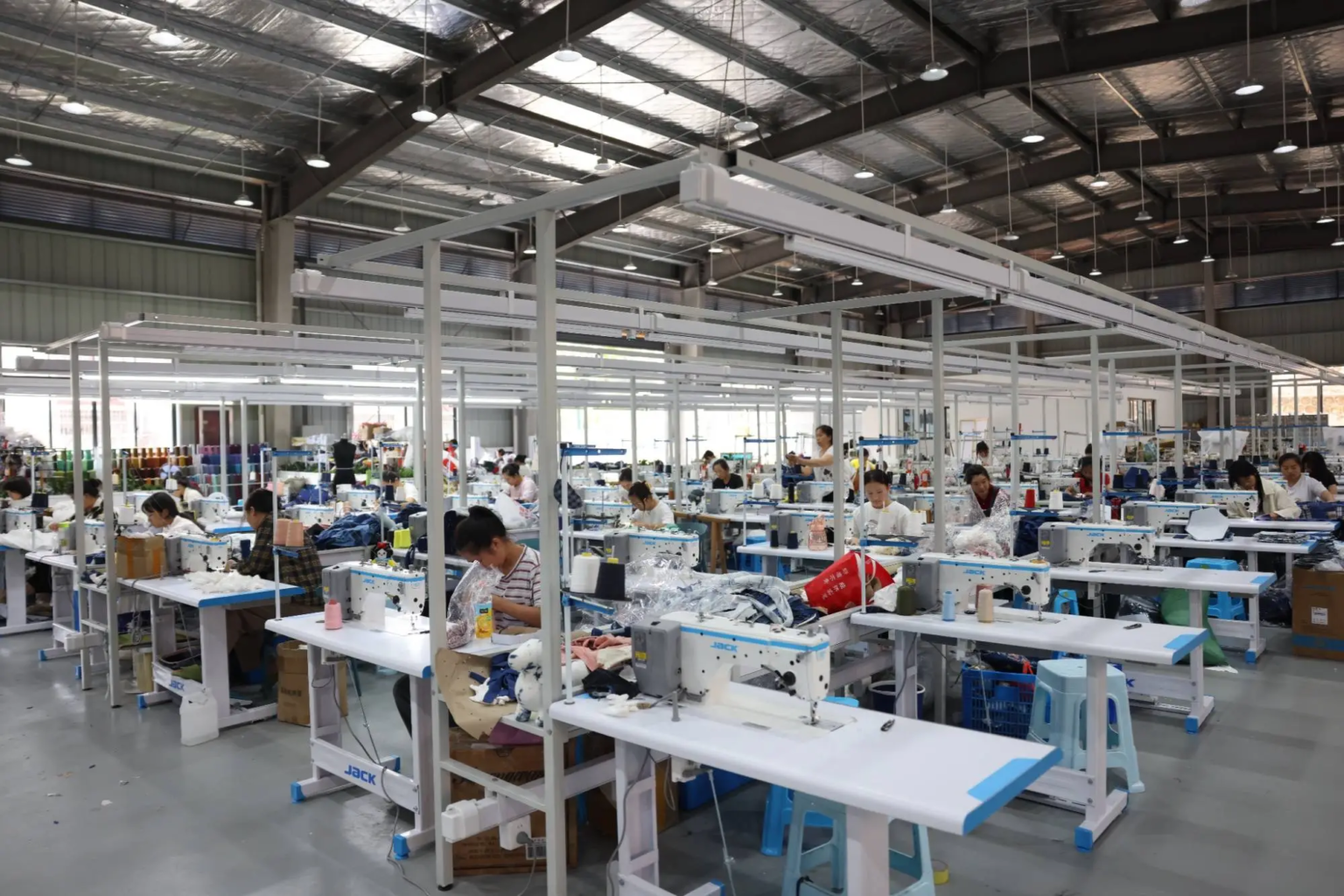
If you are building a streetwear brand, a sportswear line, or a private label activewear collection, this guide will save you months of trial, thousands of dollars in sample waste, and the single most expensive mistake new founders make: partnering with a trading company disguised as a factory.
Why 2026 Is Different for Clothing Sourcing
Three years ago, you could type "clothing manufacturer in China" into Alibaba and find decent options. Today, the top results are a mix of real factories, trading companies, AI-generated supplier profiles, and dropshipping agents who have never touched a sewing machine.
The problem is not a shortage of custom clothing manufacturers. The problem is signal versus noise. A real factory in Guangzhou now competes for your attention against a middleman in another province who simply repackages factory photos and adds a 40–100% markup.
Step 1: Verify You Are Talking to a Real Factory, Not a Reseller
This is the step that separates brands that scale from brands that bleed cash when choosing a clothing manufacturer in China. A real factory owns physical production lines, employs in-house workers, and controls the entire pipeline from cutting to finishing. A middleman outsources your order to whoever is cheapest that week.
| Verification Method | Real Factory Response | Middleman Red Flag |
|---|---|---|
| Live video call from production floor | Walks you through cutting, sewing, finishing stations in real time | "Our camera is broken" or sends a pre-recorded video |
| Ask for specific machinery details | Names models: "We use Tajima 8-head for embroidery, Kornit for DTG" | Vague answers: "We have advanced machines" |
| Request recent sample with date stamp | Shows a puff print hoodie made this week | Sends a 2019 catalog photo |
| Check product category focus | Specializes: streetwear, sportswear, activewear | Lists 50+ unrelated categories (wedding dresses + workwear + swimwear) |
| NDA & certification handling | Signs your NDA, provides BSCI/SEDEX audit number for verification | "We protect your designs, trust us" — no formal agreement |
Step 2: Match the Factory's Niche to Your Product Category
A denim jeans manufacturer and a clothing manufacturer in China specializing in activewear are completely different businesses. In 2026, successful brands do not use "generalist" factories. They use specialists.
If you are building a streetwear brand, your factory must have active, recent experience with the techniques that define the category:
| Streetwear Technique | Why It Matters in 2026 | Factory Must-Have |
|---|---|---|
| Puff print | Dominant US streetwear trend; adds dimensional texture | Specialized puff print dryers + experienced ink mixers |
| 3D embroidery | Premium brand positioning; higher perceived value | Multi-head computerized embroidery (Tajima/Barudan) |
| Heavyweight hoodies (400–600GSM) | Standard for high-end streetwear; regular factories max out at 320GSM | Thick-gauge knitting machines + heavy-duty sewing stations |
| Acid wash / vintage wash | Distressed aesthetic; requires chemical expertise and environmental compliance | In-house garment dyeing facility with wastewater treatment |
| DTG printing | Full-color custom graphics without screen setup costs | Kornit or Brother GTX systems (not desktop DTG printers) |
| Chenille patches | Varsity/streetwear crossover trend | Chenille embroidery machines + laser patch cutting |
At our Guangzhou facility, we focus exclusively on sportswear and streetwear manufacturing. That specialization means our workers, machinery, and fabric library are optimized for hoodies, tracksuits, gym wear, and activewear — not wedding dresses or corporate uniforms.
Step 3: Demand Startup-Friendly MOQs and Risk Reduction
The traditional clothing manufacturer in China model demands 500–1,000 pieces per design. That model is dead for 2026 startup brands. Market testing requires speed and low capital commitment.
Here is what a modern low MOQ clothing factory should offer:
- 100 pieces per design for custom cut-and-sew production
- Blank stock program: Ready plain hoodies and t-shirts that can be customized with your logo in 3 days
- No inventory risk options for first-time market testing
- Free 30-day warehousing so you can ship on demand instead of holding stock
Step 4: Evaluate the Full-Service Pipeline (Design to Door)
In 2026, the best clothing manufacturer in China is not just a sewing facility. They are brand development partners. Here is the complete pipeline you should expect:
- Design support — Free 3D mockup + tech pack within 24 hours of receiving your idea
- 1-on-1 designer access — Logo placement, color matching, size chart development at no extra cost
- Rapid sampling — 3 to 5 days from tech pack approval to physical sample
- Bulk production — 10 to 15 days standard; 7 days for verified rush orders
- Quality guarantee — Free remake or full refund for any defective units
- Private labeling — Neck labels, woven labels, hangtags, custom packaging (100% your brand)
- Global logistics — Door-to-door to USA, EU, Australia with tax-included (DDP) options
- Post-production storage — Free 30-day warehousing, ship whenever you need
If a factory cannot deliver steps 1 through 8 internally, you are not talking to a full-package manufacturer. You are talking to a sewing subcontractor who will force you to manage five different vendors.
Step 5: Verify Certifications and Legal Protection
For brands selling in the USA, European Union, or Australia, factory compliance is not a "nice to have." Retailers and distributors will ask for it. Customs may require it. And your brand reputation depends on it.
| Certification | What It Proves | Who Needs It |
|---|---|---|
| BSCI | Ethical labor standards, fair wages, safe working conditions | EU market entry; required by most European retailers |
| SEDEX | Transparent supply chain auditing; 4-pillar SMETA compliance | UK/EU brands; mandatory for ASOS, Zalando, and major platforms |
| NDA (Non-Disclosure Agreement) | Legal protection of your designs, tech packs, and brand concepts | Every brand with original designs; prevents factory from copying or reselling |
| ISO 9001 | Standardized quality management systems | Enterprise clients; government uniform contracts |
Step 6: Test Communication Velocity and Problem Resolution
In clothing manufacturing, time is literally money. A 24-hour delay in approving a sample correction can cascade into missing your seasonal launch by two weeks.
Before you commit to a custom apparel manufacturer, test these benchmarks:
- Initial inquiry response: Within 12 hours, even across time zones
- Sample progress updates: Every 2–3 days with photos from the production floor
- Problem escalation path: Direct access to the production manager, not just a sales representative who relays messages
- Language clarity: Can they read and interpret a tech pack correctly? Ask them to explain your spec sheet back to you
The 2026 Pre-Order Checklist: Is This Your Factory?
Print this. Score your potential clothing manufacturer in China honestly. Anything below 8/10 is a risk you cannot afford.
- Real factory verified via unscheduled live video tour of production floor
- MOQ of 100 pieces or less for test orders
- Specializes in your niche (streetwear / sportswear / activewear / workwear)
- Active capability in your required techniques (puff print, 3D embroidery, heavyweight GSM, etc.)
- Full service from design support to door-to-door delivery
- BSCI and/or SEDEX certified with verifiable audit ID
- Willing to sign your NDA or provide a mutual confidentiality agreement
- Sample ready in 3–5 days; bulk production in 10–15 days
- Quality guarantee policy in writing (free remake or refund)
- Private labeling and custom packaging available
- Door-to-door shipping to your target market with tax-included (DDP) option
- Free or low-cost warehousing for post-production flexibility
From 100 Pieces to 10,000: The Proven Growth Path
In 20 years of operating this Guangzhou clothing factory, I have seen the same growth trajectory repeat across over 1,000 brands. It is not luck. It is a system:
| Phase | Order Size | Timeline | Strategic Goal |
|---|---|---|---|
| Market Test | 100 pieces | Month 1–2 | Validate design, pricing, and audience demand with minimal risk |
| Proof of Concept | 300–500 pieces | Month 3–4 | First profitable reorder; refine sizing and color ratios based on sales data |
| Seasonal Scale | 1,000–2,000 pieces | Month 5–8 | Launch full collection; introduce private labeling (neck tags, packaging) |
| Brand Establishment | 5,000–10,000 pieces | Year 2 | Multi-collection releases; exclusive fabric development; wholesale distribution |
The brands that reach Phase 4 share one trait: they chose their first factory as a long-term manufacturing partner, not a one-time vendor. They invested in the relationship, provided clear tech packs, and respected the factory's production timelines.
Frequently Asked Questions (2026 Edition)
What is the realistic lowest MOQ for a clothing manufacturer in China today?
Real factories in Guangzhou now offer 100 pieces per design for custom production. Some facilities (including ours) also maintain blank stock programs where hoodies and t-shirts can be customized with your logo in 3 days, effectively removing MOQ risk for market testing.
How do I avoid middlemen when searching for a clothing manufacturer in China?
Demand an unscheduled live video call from the production floor. Ask specific machinery questions. Verify BSCI/SEDEX numbers on official databases. If they refuse any of these three checks, you are likely talking to a trading company, not a direct garment factory.
How long should a clothing manufacturer in China take for sampling and bulk production?
For a professional cut and sew manufacturer with in-house capability: 3–5 days for samples and 10–15 days for bulk production. Rush orders of 1,000 pieces can be delivered in 7 days if the factory maintains ready fabric stock and has spare production capacity.
Is it safe to send my designs to a Chinese clothing manufacturer?
Only if they sign a legally binding NDA (Non-Disclosure Agreement). At our factory, we sign NDAs for every client before viewing tech packs. We also maintain separate production lines for sensitive projects to prevent cross-contamination of designs. Never send original artwork to a factory that refuses formal confidentiality protection.
Can I visit the factory in person before ordering?
Yes, and any legitimate clothing factory in Guangzhou will welcome this. If travel is not feasible in 2026, request a live video production tour. We offer video calls at any time so overseas clients can see cutting, sewing, printing, and finishing in real time.
Ready to Start Production? Get Your Free 3D Mockup
If you are looking for a verified clothing manufacturer in China with startup-friendly MOQs, real factory transparency, and 20+ years of streetwear expertise, we should talk.
Mike | Guangzhou Guiping Clothing Factory
✅ 100-Piece MOQ | ✅ 300+ Workers | ✅ 10,000+ Pcs Daily Output
✅ BSCI & SEDEX Certified | ✅ NDA Available | ✅ Door-to-Door to USA/EU/AU